Nothing is more frustrating for an Amazon KDP self-publisher than finishing a 100-page puzzle book manuscript, uploading the interior PDF, and having Amazon's automated Print Previewer flag dozens of margin and gutter errors. Choosing the wrong trim size or incorrect gutter margins doesn't just trigger print rejections—it ruins the solver's physical experience.
Unlike standard novels or fiction paperbacks where readers simply turn flat pages, puzzle books are interactive workbooks. Solvers need sufficient margin clearance near the binding so they don't have to break the book spine just to circle words or write numbers into grid squares.
In this comprehensive technical guide, we will break down the exact trim sizes, gutter margin tables, bleed settings, and spine thickness formulas required to publish flawless, print-ready puzzle books on Amazon KDP.
What You Will Learn in This Guide
We will compare 8.5×11 vs 6×9 trim sizes, provide the complete KDP gutter and margin reference table, explain bleed rules, show the spine width formula, and demonstrate how to export pre-calibrated puzzle interiors with Publisher Tool Hub.
8.5×11 vs. 6×9: Which Trim Size Should You Choose?
Amazon KDP supports over a dozen paperback trim sizes, ranging from 5×8 inches up to 8.25×11 inches. However, in the activity and puzzle book categories, over 92% of all Amazon bestsellers are published in one of two formats: 8.5 × 11 inches (Letter size) or 6 × 9 inches (Trade size).
Choosing between them depends directly on the type of puzzles inside your book and your target buyer demographic:
| Feature / Factor | 8.5 × 11 in (21.59 × 27.94 cm) | 6 × 9 in (15.24 × 22.86 cm) |
|---|---|---|
| Best Puzzle Types | Word Search, Crosswords, Large Print, Variety Packs, Coloring Puzzles | Sudoku, Cryptograms, Word Scramble, Pocket Logic Puzzles |
| Target Audience | Seniors, adults at home, classroom teachers, kids & beginners | Commuters, travelers, hospital patients, coffee-table solvers |
| Grid Space & Legibility | Maximum letter grid size; comfortable room for 15px+ large clues | Compact; grids must be smaller (under 12×12 letters recommended) |
| Perceived Value & Price | Commands higher retail price ($7.99 to $11.99 on Amazon) | Lower retail sweet spot ($5.99 to $8.99 on Amazon) |
| Solution Key Density | Easily fits 4 or 6 solution keys per solution page | Best limited to 2 or 4 solution keys per page |
| Amazon Print Cost (108 Pages) | ~$2.45 per unit (B&W white paper) | ~$2.45 per unit (B&W white paper) |
When to Choose 8.5 × 11 Inches
If you are creating Word Search Books, Crossword Collections, or any title marketed with the high-demand keyword "Large Print", 8.5×11 inches is practically mandatory.
Senior solvers and adults with visual impairments will immediately return or leave 1-star reviews on a word search book printed at 6×9 inches if the letter grid is condensed and the clues are cramped. The 8.5×11 format provides ample surface area for generous margins, decorative coloring borders, and multi-column clue lists.
When to Choose 6 × 9 Inches
The 6×9 inch format is ideal for single-puzzle formats that don't require sprawling grids, such as Sudoku (standard 9×9 grids), Cryptograms (quote deciphering), and Word Scramble.
Books positioned as "Pocket Travel Puzzles," "Commuter Brain Teasers," or "Stocking Stuffers" sell exceptionally well at 6×9 because buyers want a portable book that easily slips into a purse, briefcase, or carry-on backpack.
KDP Gutter & Outer Margins: The Complete Table
The most critical technical specification for paperback publishing is the Inside Margin (commonly known as the Gutter).
The gutter is the extra margin added to the inner edge of the page where the physical paper sheets are glued into the paperback binding spine. If your gutter margin is too narrow, the inner columns of your puzzle grid or clues will disappear into the crease of the spine, forcing solvers to pry the book open with two hands.
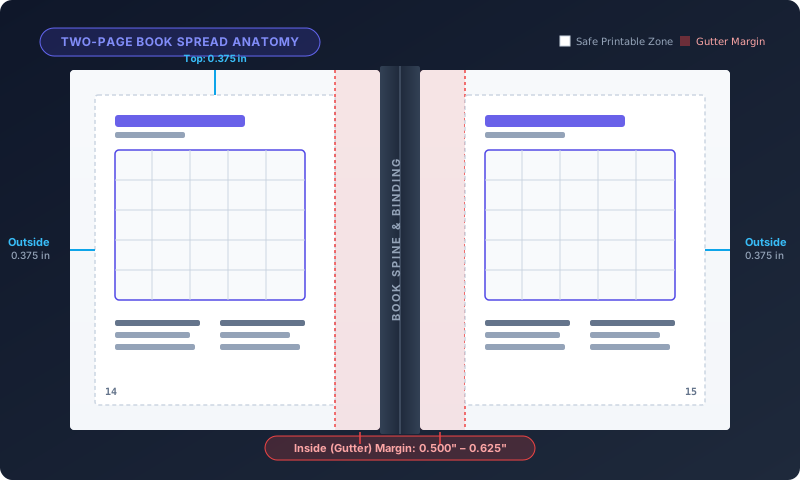
Amazon KDP enforces minimum gutter requirements based on your total manuscript page count. Here is Amazon's official requirement alongside our recommended publisher settings:
| Total Page Count | KDP Minimum Gutter | Recommended Gutter for Puzzles | Top / Bottom / Outside Margin |
|---|---|---|---|
| 24 to 150 pages | 0.375 in (9.5 mm) | 0.500 in (12.7 mm) | 0.375 in to 0.500 in |
| 151 to 300 pages | 0.500 in (12.7 mm) | 0.625 in (15.9 mm) | 0.375 in to 0.500 in |
| 301 to 500 pages | 0.625 in (15.9 mm) | 0.750 in (19.1 mm) | 0.500 in (12.7 mm) |
| 501 to 700 pages | 0.750 in (19.1 mm) | 0.875 in (22.2 mm) | 0.500 in (12.7 mm) |
The "Perfect Binding" Reality Check
Amazon print-on-demand books use standard glue "perfect binding." They do not lay flat like spiral-bound workbooks. Never use KDP's bare minimum 0.375 in gutter for a 120-page book—always buffer to at least 0.500 in or 0.625 in so solvers can write right up to the edge without discomfort.
Bleed vs. No Bleed for Puzzle Books
During the KDP Paperback Content upload step, Amazon will ask you to select between two options:
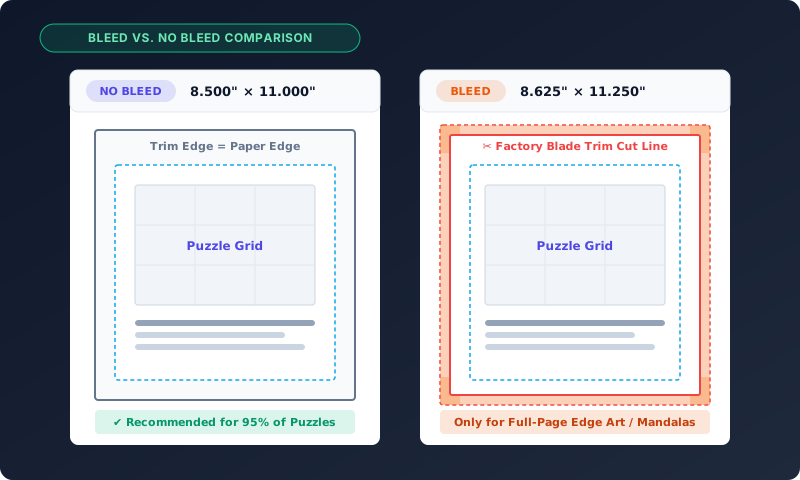
- No Bleed (Standard for 95% of puzzle books)
- Bleed (PDF only) (Used when graphics run off the page edge)
The Golden Rule for Puzzle Books
Unless you specifically have decorative mandala coloring backgrounds or graphic header bars that touch the physical edge of the paper, always select "No Bleed".
When you choose "No Bleed", your uploaded PDF page dimensions must match your exact trim size:
- For an 8.5 × 11 in book: Your PDF page size must be exactly 8.500 × 11.000 inches.
- For a 6 × 9 in book: Your PDF page size must be exactly 6.000 × 9.000 inches.
When Do You Actually Need Bleed?
Bleed is required only if artwork or decorative frame lines extend past the trim line and are trimmed off during printing. If you enable Bleed:
- You must add 0.125 inches (3.2 mm) to the top, bottom, and outside width.
- An 8.5 × 11 in page becomes 8.625 × 11.250 inches.
- A 6 × 9 in page becomes 6.125 × 9.250 inches.
If your PDF is sized at 8.625×11.250 in but you select "No Bleed" in KDP, Amazon will throw a dimension mismatch error and block your publication.
Page Counts and Spine Width Calculation
Your book cover wraps around both the front, back, and spine. While the interior page size is static, your cover file width changes based on your exact page count because more pages make the spine thicker.
The Amazon KDP Spine Width Formula
For standard Black & White interior paper (55# white paper), Amazon calculates spine thickness using this exact multiplier:
Spine Width (Inches) = Page Count × 0.002252 in
| Interior Page Count | Spine Thickness (B&W White Paper) | Can You Put Text on the Spine? |
|---|---|---|
| 60 pages | 0.135 in (3.4 mm) | No (too thin for legible text) |
| 80 pages | 0.180 in (4.6 mm) | No (minimum recommended is 100 pages) |
| 108 pages (Standard) | 0.243 in (6.2 mm) | Yes (Clear, readable title & volume) |
| 120 pages | 0.270 in (6.9 mm) | Yes (Comfortable spine text) |
| 160 pages | 0.360 in (9.1 mm) | Yes (Large spine text & logo) |
Pro Publisher Tip: Aim for between 100 and 120 pages for your puzzle books. At 108 pages (e.g., 80 puzzle pages + 20 solution pages + front matter/blank pages), your book is thick enough to have an attractive spine on a bookstore shelf or in customer photos, while keeping your Amazon printing cost at just ~$2.45 per copy.
How to Generate Perfectly Formatted Interiors for Free
Setting up gutters, margins, and page dimensions by hand in Photoshop or InDesign takes hours and is prone to human error. That is why we built pre-calibrated export settings directly into every studio tool at Publisher Tool Hub:
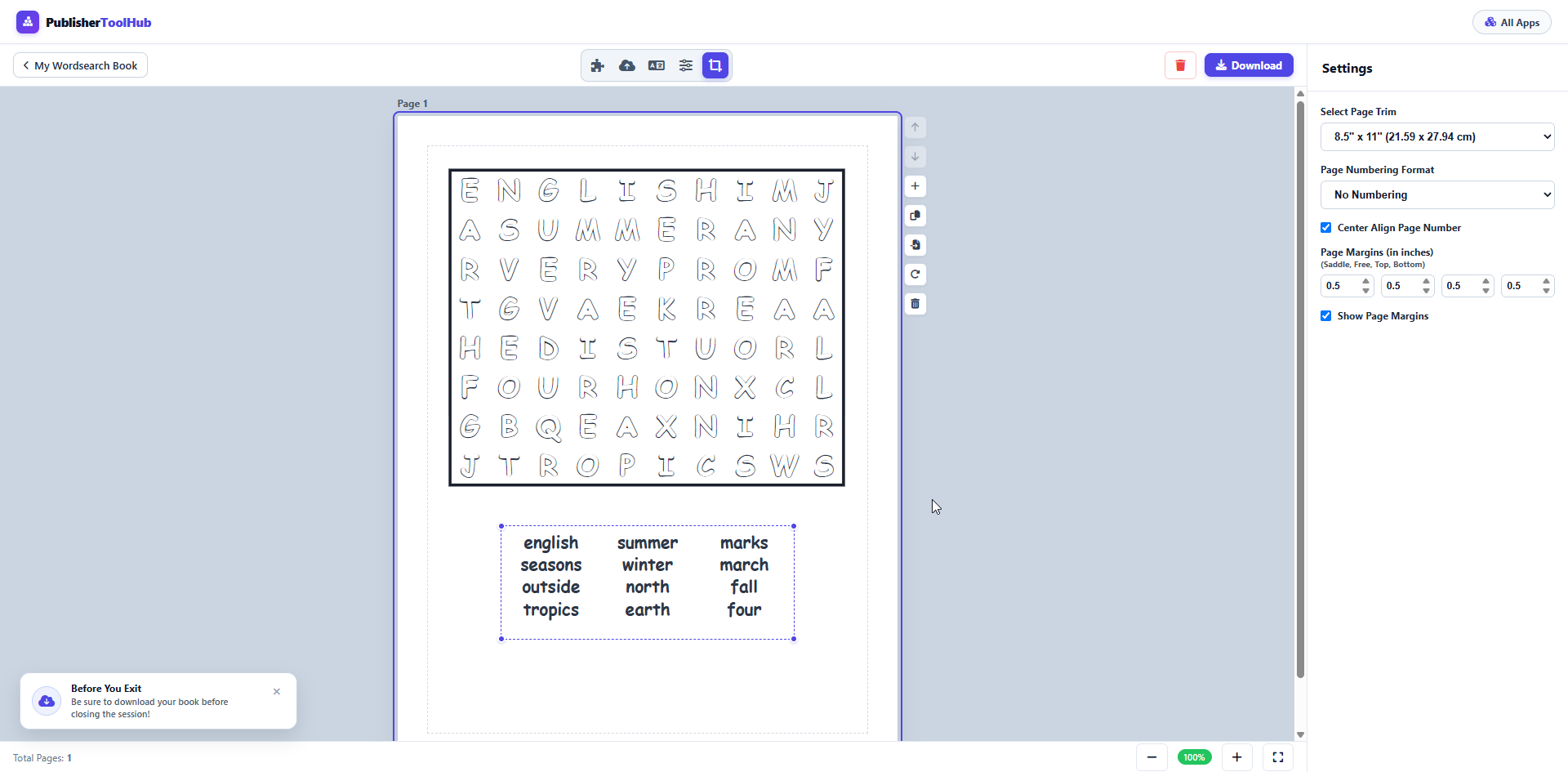
- Word Search Studio: Automatically centers 15×15 or 18×18 grids, enforces a minimum 0.500 in boundary, and formats solution keys in 2-up or 4-up grids to minimize page bloat.
- Crossword Studio: Auto-arranges clues beneath dense grids without allowing text to bleed across the outer 0.375 in safe boundary.
- Sudoku Studio: Generates symmetric 9×9 grids centered with high contrast borders, guaranteed to print crisply on standard KDP uncoated 55# white paper.
- Cryptogram Studio: Places cipher text, blank deciphering lines, and letter frequency hints with ample vertical line spacing for easy handwriting.
- Bingo Card Studio: Produces randomized 5×5 game cards with clear header fonts and generous write-in margins.
Frequently Asked Questions
What is the best trim size for a KDP puzzle book?
Do KDP puzzle books require bleed?
What gutter margin should I use for a 100-page puzzle book on KDP?
Why did Amazon KDP reject my puzzle book interior PDF?
How many pages should an Amazon KDP puzzle book have?
Ready to Create Your Print-Ready Puzzle Book?
Generate Word Search, Crossword, Sudoku, Cryptograms, and Mazes formatted with perfect Amazon KDP margins in seconds. No subscriptions, no software downloads.
Open Free Puzzle Studios →